
Teacher, Motivator, Trainer, Writer, Blogger, Fotografer, Father, Pembicara Seminar, dan Workshop Tingkat Nasional. Sering diminta menjadi pembicara atau nara sumber di bidang ICT,Eduprenership, Learning, dan PTK. Siapa membantu guru agar menjadi pribadi yang profesional dan dapat dipercaya. Wijaya adalah Guru SMP Labschool Jakarta yang doyan ngeblog di http://wijayalabs.com, Wijaya oleh anak didiknya biasa dipanggil "OMJAY". Hatinya telah jatuh cinta dengan kompasiana pada pandangan pertama, sehingga tiada hari tanpa menulis di kompasiana. Kompasiana telah membawanya memiliki hobi menulis yang dulu tak pernah ditekuninya. Pesan Omjay, "Menulislah di blog Kompasiana Sebelum Tidur". HP. 08159155515 email : wijayalabs@gmail.com.
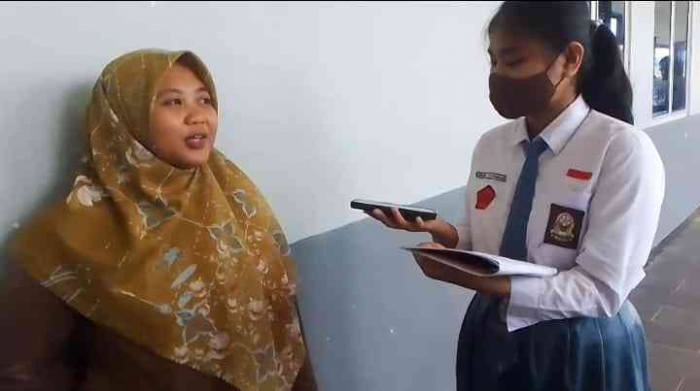
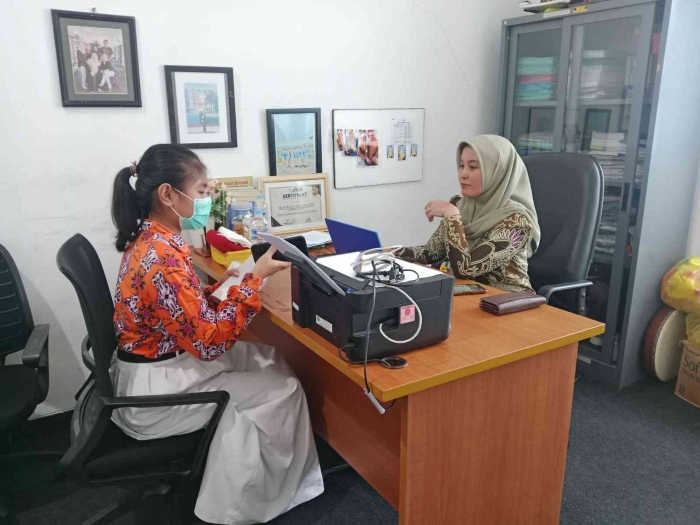 Students of SMA Negeri 16 Samarinda Challenged to Become Young Journalists/dokpri
Students of SMA Negeri 16 Samarinda Challenged to Become Young Journalists
Samarinda -- Journalism is not only the domain of professional reporters. At SMA Negeri 16 Samarinda (SMANAS), twelfth-grade students are challenged to experience the role of journalists through a final project of writing a news article. The activity is part of the English lesson taught by Miss Yuni and focuses on the learning objective of writing a News Item.
Through this assignment, students are required to produce a news article based on real issues happening within their school environment. Miss Yuni explained that the project is designed not only to improve students' writing skills but also to introduce them to the process of news gathering and storytelling.
According to her, students must go through several stages similar to professional journalists. They need to find current issues in the school, conduct observations, gather information, and interview relevant sources before writing their news reports.
"We want students to understand how journalists work---from identifying an issue to presenting factual and informative news," Miss Yuni explained.
The initiative has also received strong support from other teachers at the school. Bapak Rozak, a senior teacher, expressed his appreciation for the activity because it helps students develop essential academic and life skills.
He believes that this type of project encourages students to strengthen their research abilities, writing competence, and critical thinking.
"This activity trains students to explore information carefully and present it responsibly. These are important skills for their future," said Bapak Rozak.
Highlighting the School Library Accreditation Issue
One of the most interesting student news articles focuses on the school library accreditation preparation. In their report, students describe the efforts made by the school to prepare the library for accreditation next year.
The head of the school library, Ibu Dyah, explained that the preparation process begins with the formation of a special accreditation committee. The committee is structured clearly to ensure that every member understands their responsibilities.
After the committee is formed, the team conducts coordination meetings to divide tasks and plan the preparation stages systematically.
To gain further insights, the school also conducted a comparative study visit to SMK 3 Samarinda, a vocational school that successfully obtained library accreditation in the previous year.
According to Ibu Dyah, one of the most important aspects of library accreditation is the library collection. This includes the quantity of books, the variety of book types, and their relevance to the school curriculum and students' learning needs.
In addition to the collection, infrastructure and library services are also crucial components evaluated in the accreditation process.
"Once all the components are well prepared, the school will submit an official accreditation application to the national accreditation agency," she explained.
Library as a Center of Literacy
The library of SMA Negeri 16 Samarinda operates every school day starting at 07:15 a.m. The schedule ensures that both students and teachers can easily access the library during school hours.
One of the teachers who frequently uses the library as a learning space is Ibu Nisa. She explained that she sometimes conducts classes in the library, especially for classrooms that do not have projectors or other learning media.
According to her, the library provides a supportive environment for learning because students can directly access reference books during lessons.
"The library becomes an ideal place for learning because students can immediately find the references they need," she said.
Students' Expectations for Library Collections
Students have also shared their feedback regarding the library facilities. Waode Rosmita, one of the students who regularly visits the library, explained her experience in searching for books there.
She said that sometimes it is easy to find the books she needs, but at other times she struggles because some titles are not yet available.
"Approximately 50 percent of the books I look for are available in the library, while the other 50 percent are not yet available," she said.
Rosmita added that many students are interested in reading fiction novels from various genres that are popular among teenagers. Unfortunately, the school library's novel collection is still limited.
However, she hopes that the upcoming accreditation process will help improve the library's collection by adding more books, especially novels that match students' interests.
With a richer and more diverse collection, the library is expected to better support students' literacy development and encourage a stronger reading culture among them.
Building Literacy and 21st Century Skills
The journalism project at SMA Negeri 16 Samarinda demonstrates that learning does not always have to take place through conventional classroom methods.
Through project-based learning like this, students not only gain theoretical knowledge but also develop important 21st-century skills, such as information literacy, communication, collaboration, and critical thinking.
By experiencing the role of "young journalists," students gain confidence in writing, presenting ideas, and delivering information responsibly.
This initiative also highlights how schools can nurture creativity and literacy, preparing students to become active contributors to society in the future.
 Students of SMA Negeri 16 Samarinda Challenged to Become Young Journalists/dokpri